30/03/2008

When locators are absolutely useful

The Guardian again. Some months ag I complined about an absolute useless locator on its web. It was the following:


Maybe it's useful for people from Jokela, Tuusula (Finland), but I don't think the percentage of Guardian reader there would be very high.
In the other hand, this time happens just the opposite.
The new was that a private plane crashed on Kent. This was the locator:


Useful information on it:
1. Where in London crashed the plane
2. That it happened very near from the airport
3. That it fell very near from a hospital, that could cause a bigger disaster

Those are very good reasons to have locators on page.

Michael Robinson. Graphics & The Guardian

This Malofiej edition had a new president of the jury. He was Michael Robinson, Graphics Director at The Guardian (UK). One of my favourites newspaper (and so it is for many others).


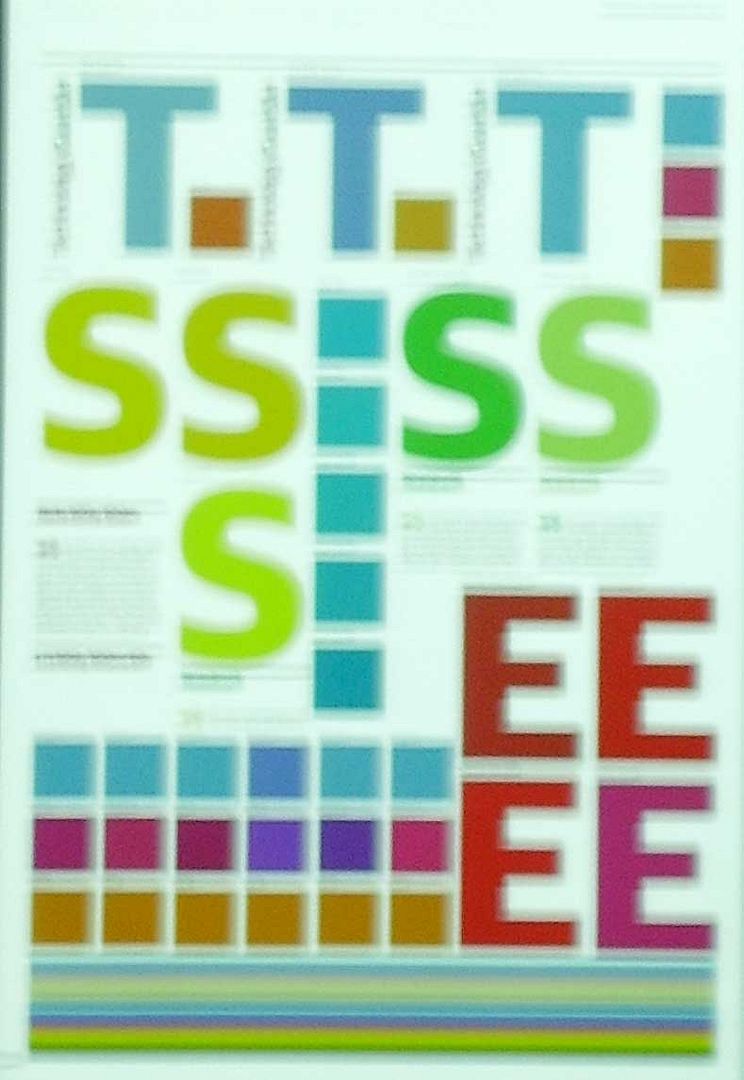
Color palette and graphics elementes used by the infographics section of The Guardian

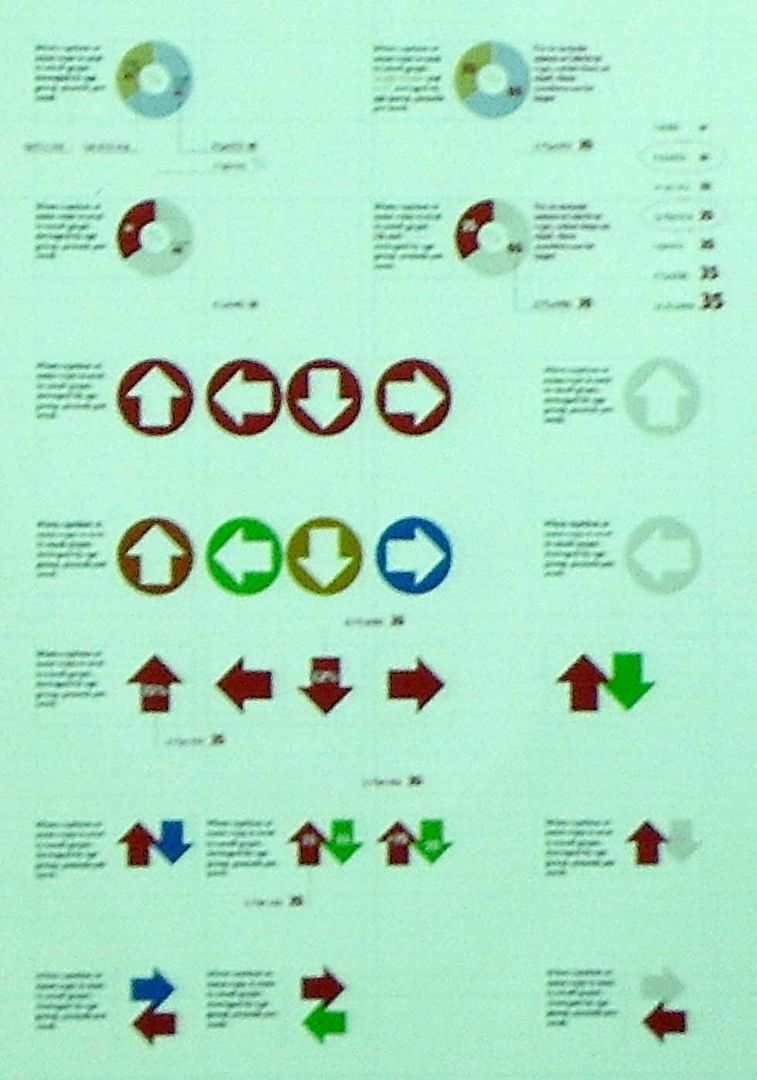
Robinson talked much about the newspaper design. It made visible how the decissions which were taken through Mark Porter's famous redesign had a huge influence over all the newspaper department. And obviously over infographics. Decissions about fitting graphics on page, color use, sizes or styles of the graphics look for the perfect integration with the rest of the newspaper. We could also see how The Guardin is not apat of the 'recent' fashion of using circles to show statistic data. Most of the graphics shown on the talk used them.


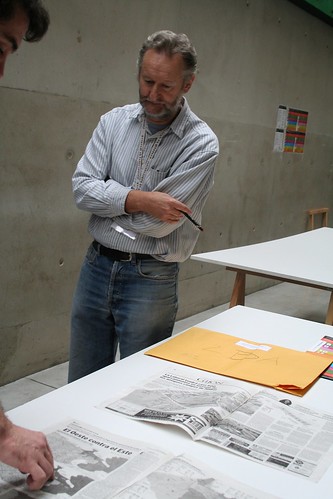
Left: uone of the graphics shown on the conference. Right: Michael Robinson judging at this Malofiej edition (image from Malofiej16 photo pool on Flickr

The talk was abouth how The Guardian deals with graphics. The conclussions were: the integration I told you before, the strong bet for clarity on graphics, few but clear data, great use of color and charts... and always looking for smart graphics.


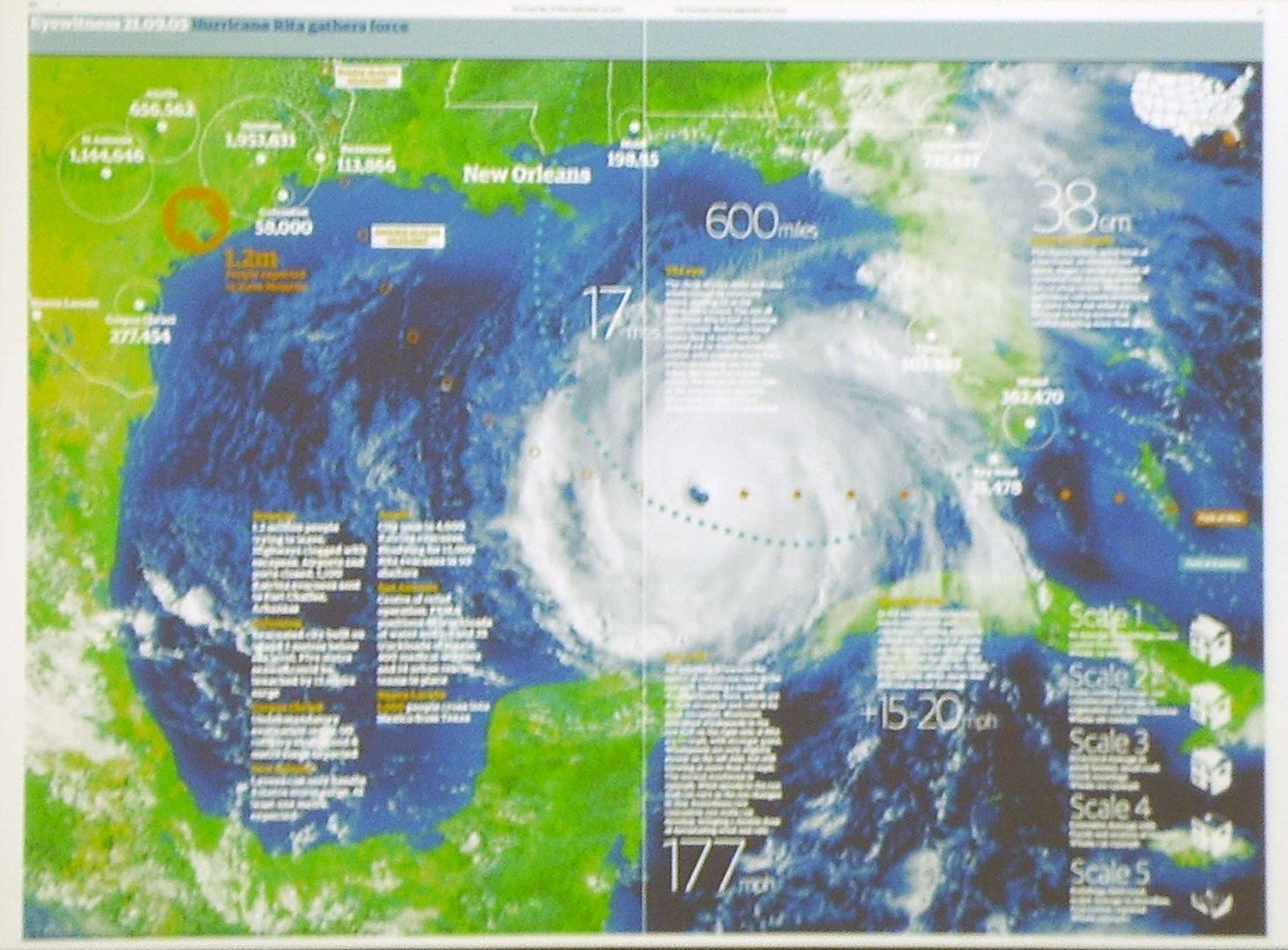
Sometimes, the centre doublespread photo leaves its place for a doublespread graphic

26/03/2008

News Illustrated


Let's welcome the new infographics blog by South Florida Sun Sentinel graphics department, called News Illustrated. I must say I disagree with the name, because in our department we always tell the writers that we don't illustrate the news, we explain the news.
To access, here

25/03/2008

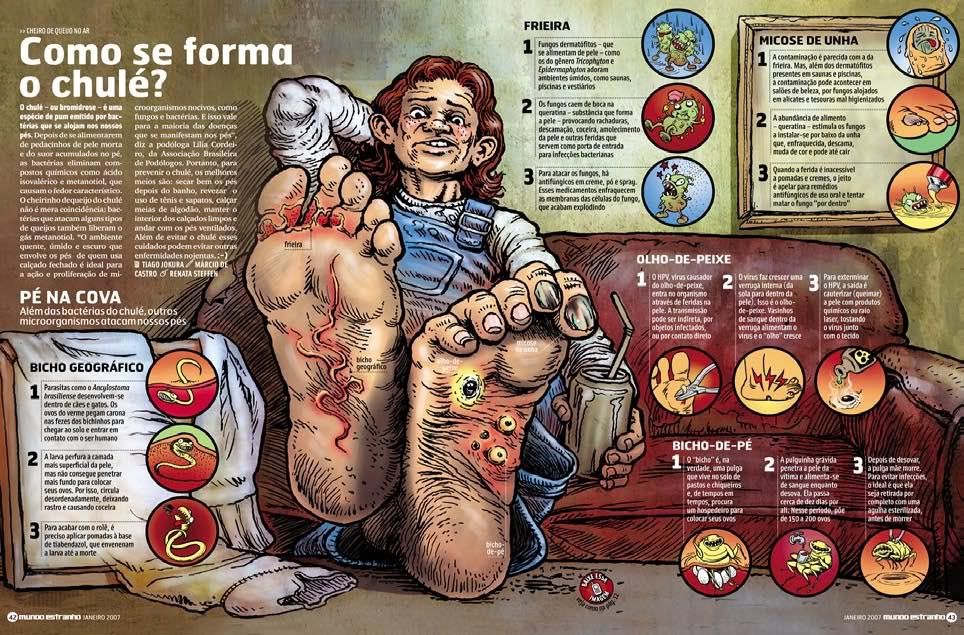
Renata Steffen: I Love Infographics


Image from update.snd.org

Again on Malofiej talks. Other of the first day conferences was the one of Renata Steffen, infographics artist from Folha de Sao Paulo and, before, Mundo Estranho, a teenager magazine wich took the biggest part of the talk, and how it has to reach its target, young kids (12-13 years old).


One of the most interesting parts was when she explained how Mundo Estranho try to adapt its lenguage to teenagers, separating the visual references from school books and taking them near of comic. They explain science topics, but in a funny way, making kids more comfortable reading the magazine.


Photos from carlogiovani.com

Other example from this adaptationa was the graphic 'Sexo (tô) por dentro' (above), whic got a gold at the previous edition of Malofiej.
The process followed to create the graphic was:
1. Google 'sex'
2. She noticed that many images were about tattoos
3. She choose the style from a famous japanese tattoo artist, and ask a illustrator to make the illos for the graphic following the style chosen
4. Photos are made to 'support' the tattoos
5. all get reunited and the graphic is done


Photos from carlogiovani.com
More about Renata Steffen's talk, by herself, on Visualmente (in portuguese)

End of Easter


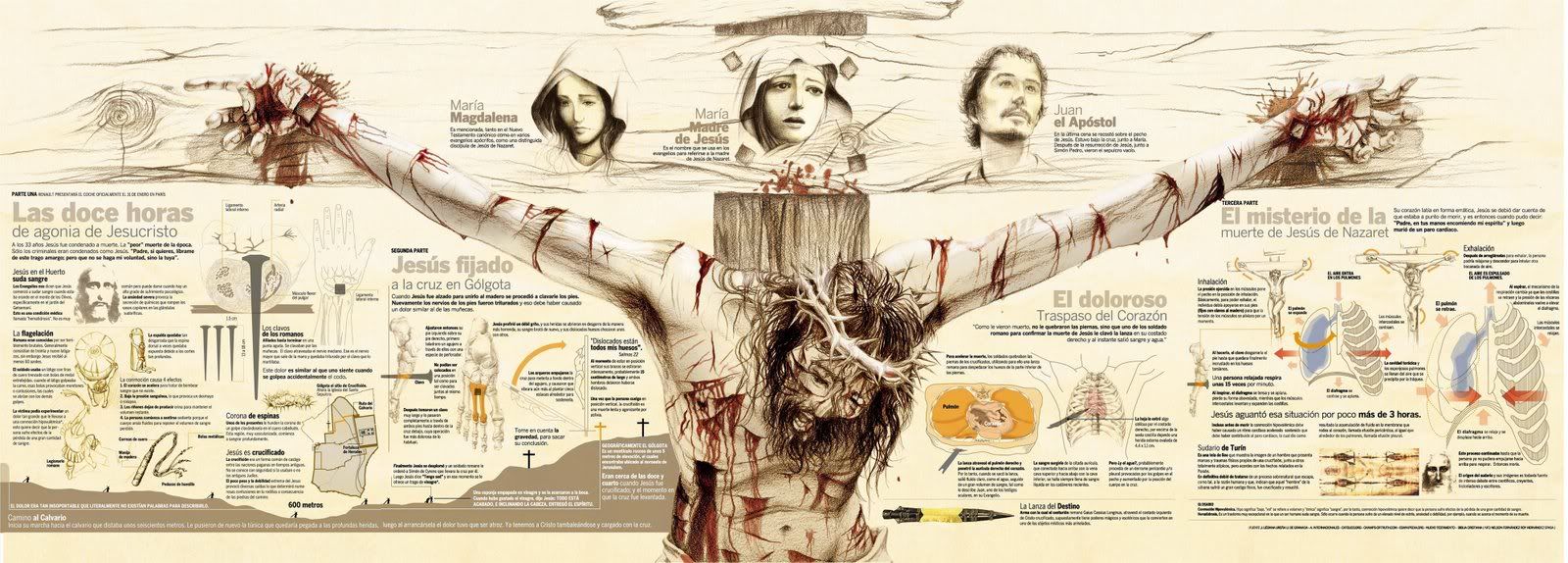
And to illustrate it, a graphic by Nélson Fernández, infographics artist from Venezuela working for EPASA (Panamá), with the illustrator Roy Hernández. The topic, passion of the Christ.

21/03/2008

Crisis, what crisis?

Everybody say we have one in the newspapers industry, and maybe that's true. But this is not what we can perceive from the hiring and movements in the infographics departments. After last year revolution, with some 'all-star hiring' as teh two made by National Geographic with Tumas (Clarín) and Baptista (El Correo). Pero no se nota en los movimientos de infografistas. Despué de la revolución del año pasado, en la que National Geographic fichó a Tumas (Clarín) y Baptista (El Correo), this year is beggining with other hits to the market.

Manolo Romero, Infographics Editor of Gurpo Joly and Diario de Sevilla, left his place in the andalusian newspaper to make his own bussiness, although he stays inside the infographics industry (if there is such industry)

Geoff McGhee, one of the 'historycal' members of NYTimes.com, start an european adventure at Le Monde, which could represent a revolution on the french media webs.

Mariano Zafra, infographic artist at El Mundo, goes to its main contendent, El País.

And all those whic have been and I didn't notice. And all that are still to come.

Congratulations to all, and the newspapers who hired them

20/03/2008

Alberto Cairo. Interactivity on media infographics

About Alberto Cairo's conference it would be not needed t ay anything because he has uploaded on his web a PDF with it that you can download. The problem is that it is in Spanish, so here you are a little translation of the most important details.
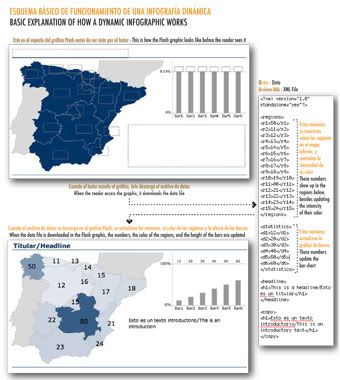
Cairo talked abut the importance of interaction on the online graphics. He gave three kinds of online interaction: instruction, manipulation and exploration. Each one of them less common. On the first one we just give an 'instruction' to the graphic and it does it. On the second one, we can change the graphic manipulating it with multiple variables. On the third, the is a complex world we can explore, as videogames.
Lineal graphics are not bad. Each kind of information has it way of explanation.
We have to let the reader analyze the information. Give them a tool that they can use to manipulate the data and explore through the variables. Don't give the data analyzed. Let them do it, and each one would have their different conclussions.
About design, he defended that buttons should look like buttons, to make the interface easy to handle. But we must know that readers spend more time on atractive interfaces. Deciding what it's atractive depends on the target we have.

Personally, it was a very useful cnference for me. I'm starting with online graphics and Alberto discovered me the world of XML. I've already bought two books, I'll tell you later if I finally learn to use it, but this is my New Malofiej proposal...

Sólo por añadir una valoración personal deb decir que era de gran utilidad sobre todo para aquellos que no controlamos aún el medio online. A mí personalmente me ha dado a conocer las bondades antes deconocidas del XML y ya me he comprado dos libros a ver si me pongo con ello.

19/03/2008

Javier Errea. Can infographics save newspapers?


Photo from update.snd.org


Javier Errea's conference had a preview on Visualmente, but, what he aid on the University of Navarra was beyond infographics. Errea ade a strong bet for hybrid genre. An economics article can be explained with a comic strip, we can have op-columns without words, as Diario de Noticias (Pamplona) made to complaint for the arrest of their director. He's againt orthodoxy and with visual communication.
He defeden journalism above the rest, which works better than promotions, magazines and invasive ads. All in order to save the print media.
He also demostrated that the actual innovative solutions for infographics has been applied many years before. Fortune in the 30's, London Illustrated or Colors in the 90's have used before our original chartings systems, but also some of the principles Errea wants for the future of print.
He spoke about 'infographics stle eras'. First, with the fisrt war of Iraq, was the fascination for the tool: all big, colors, spectacle. The second Iraq war was different. We get used and looked for moro effectivity. He described the present era with a pseudomathematic formula:
50% of The New York Times + 25% of Jaume Serra's Clarín + 25% of Baptista's and Zarracina's El Correo

Tufte and the orthodoxy works well sometimes, but other information needs a plus to hook on the readers.

Mi personal opinion, and not so qualificated as Errea's, is that it's true than we have not to be 'talibans' of the graphics, but neither we can think that everything is fine. If tomorrow El Pais explains an economics information with cartoons, I suppuose we'll have some heart attacks in Spain. Errea says that the problems we put on this formulas came form journalists, but never from readers. In my opinion, is a step by step path. Young or popular newspapers can apply radical solutions, other, token as 'more serious' (although I hate this calification), have to go litle by little. But also having The Times in tabloid looked as impossible and here it is. I agree with Javier, but I also think taht this solutins are not exclussive from graphics department. Most of the ideas he shown was design solutions. It doesn't metter who take the determination, but the step he ask us to take must be a step taken by all the newsroom: editors, designers, writers, photographers...

17/03/2008

The other awards

I'll be adding the awardeds on this slide show (except the ones from Público (Spain), which appeared on the last post). Below, I'll add the links of the online awarded. Send them if you got them!


PETER SULLIVAN AWARD
- Deadly Rampage at Virginia Tech. NYTIMES.COM

GOLD
- Climbing Kilimanjaro. NYTIMES.COM

SILVER
- Cómo funcionan los juegos pirotécnicos. ELTIEMPO.COM
- The hidden enemy. NEWSWEEK.COM
- What happened? Death of Jean Charles de Menezes. BBC.CO.UK
- Light beneath the streets. NYTIMES.COM
- The wealthiest american ever. NYTIMES.COM
- The Master of Clay Takes Aim at the Fast Courts. NYTIMES.COM
- Cámara internacional de semillas Svalbard. CONSUMER.ES
- Aparcamientos robotizados. CONSUMER.ES
- El Gran Telescopio de Canarias. ELMUNDO.ES
- The Met's New Greek and Roman Galleries. NYTIMES.COM
- What Excessive Pay Package?. PORTFOLIO.COM

And, by the way, a video about this year Malofiej by Expresso

Malofiej Awards of Público

Here you are the awarded graphics of Público (Spain). If someone has won anything on Malofiej and is reading this, please send your awarded graphics to build a galley. Thanks a lot in advance. I'll start tonight writing something about the conferences


The terrorist plot. GOLD. Álvaro Valiño


F1 races. SILVER. Chiqui Esteban, Miriam Baña


General portfolio. SILVER. Chiqui Esteban, Álvaro Valiño


AIDS real map. BRONZE. Miriam Baña, Jorge Doneiger (consultant)


Who's who in the boxes. BRONZE. Ana K. Landi


Spain budget. BRONZE. Álvaro Valiño, Jorge Doneiger (consultant)

16/03/2008

MALOFIEJ 2008. The Awards

First of all, sorry for the delay. The internet conection at Pamplona was just utopic.

FIRST AWARDS FOR FIRST STEPS
Sorry for the 'autopromotion', but this time I have to seize the opportunity. One gold, two silvers and 3 bronzes for Público (Spain), having launched the newspapers at September 26th of 2007, made us to be more than glad. The big one was the golden medal for the graphic about the judgement for the bombings of March 11th at Madrid.
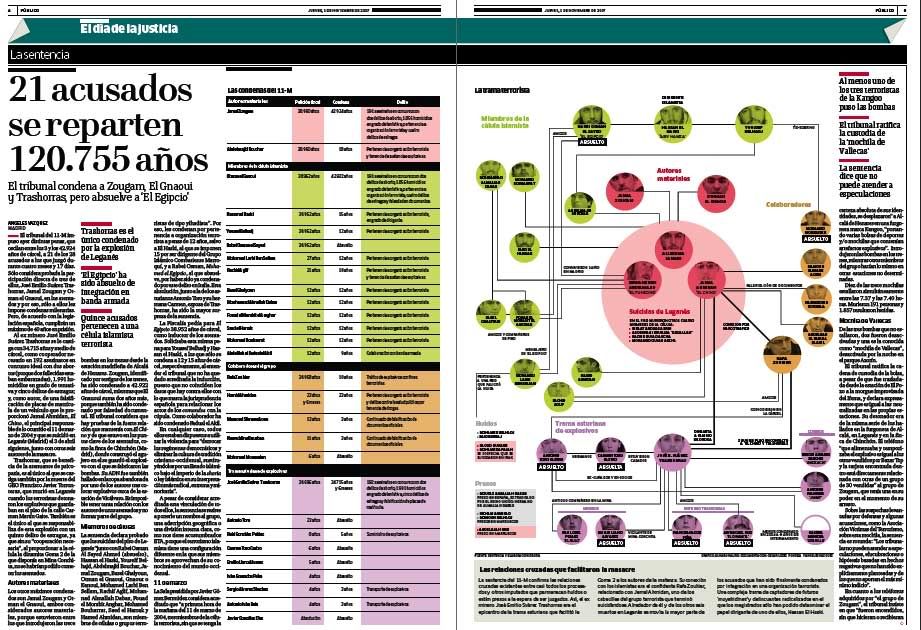

The terrosrist plot.Álvaro Valiño

Dos platas, una por portfolio de reportajes y otra por los gráficos que contaban como transcurrió la carrera de F1 al día siguiente. Y tres bronces, por 'Quién es quién en los boxes', 'El mapa real del SIDA' y 'De dónde viene y a dónde va el dinero del Estado'

Our department is formed by Álvaro Valiño, Miriam Baña, Ana Landi and myself. 30 years the eldest. And we had help from Jorge Doneiger and Pablo Loscri (Clarín), as consultants for the launching.

Now come the pressure to demonstrate that this is not just one lucky day.

NYTIMES.COM, THE BIG ONE
On the year of 'balls' graphics, its big representer got the Peter Sullivan award, the biggest award of the show. And it wasn't with a graphic made with balls, but for the coverage of Virginia Tech Massacre.
Is a superb job, but I still prefer 'Buy or rent'.

THE CONFERENCES
I'll be uploading the conferences, not complete, but as long as I could. I won't upload all together, but one for day more or less.

THE AWARDS

1. NYtimes.com
Peter Sullivan Award- Georgia Tech Massacre
3 golds, 5 silvers, 5 bronzes

2. The Guardian
2 golds, 1 silver, 1 bronze

3. National Geographic
M. Urabayen award for the best map - Live still at risk
1 gold, 2 silvers, 5 bronzes

4. Público (Spain)
1 gold, 2 silvers, 3 bronzes

5. Newsweek.com
1 gold, 1 silver, 3 bronzes

6. Expresso
1 gold, 1 silver, 3 bronces

7. The New York Times
8 silvers,2 bronzes

8. Clarín
4 silvers, 7 bronzes

9. Aventuras na Historia
2 silvers, 4 bronzes

10. Fortune
2 silvers, 3 bronzes

10. Consumer.es
2 silvers, 3 bronzes

12. Superinteressante
2 silvers, 1 bronze

12. Golden Section Graphics
2 silvers, 1 bronze

12. KircherBurkhandt GmbH
2 silvers, 1 bronze
14. Washington Post
2 silvers

14. Portfolio.com
2 silvers

16. El Mundo
1 silver, 3 bronzes

17. elmundo.es
1 silver, 2 bronzes

18. Folha de Sao Paulo
1 silver, 1 bronze

18. Diario de Sevilla
1 silver, 1 bronze

20. El Universal
1 silver

20. The Seattle Times
1 silver

20. Clave
1 silver

20. ElTiempo.com
1 silver

20. BBC.co.uk
1 silver

20. Semanario Económico
1 silver

26. Stern
3 bronces

26. The Dallas Morning News
3 bronzes

26. As
3 bronzes

26. Público (Portugal)
3 bronzes

26. Marca.com
3 bronzes

31. ABC
2 bronces

31. Mundo Estranho
2 bronzes

31. Marca
2 bronzes

31. ABC
2 bronzes

35. La Crónica de León
1 bronze

35. La Tercera
1 bronce

35. Ashasi Shimbun
1 bronce

35. La República
1 bronze

35. MCT Graphics
1 bronze

35. La Voz de Galicia
1 bronze

35. Delovoy Peterburg
1 bronze

35. XPLANE
1 bronze

35. The Sunday Oregonian
1 bronze

35. The Oregonian
1 bronce

35. Saude
1 bronze

35. Svenska Dagbladet
1 bronze

35. Nova Escola
1 bronze

35. La Gaceta de los Negocios
1 bronze

35. O Globo
1 bronce

35. Guardian Unlimited
1 bronze

35. Hiru.com
1 bronce

35. ElComercio.com.pe
1 bronce

35. Nepsazasblag
1 bronce

35. ELPAIS.com
1 bronce

35. EITB24.com
1 bronze

35. EMOL.com
1 bronze

35. Último Segundo
1 bronze

11/03/2008

How to generate traffic jams


Infographics are not just a matter of Illustrator, Flash, Photoshop or 3d software. Videos are also a good way to explain things and not just show them, as senn on this great example by New Scientist.

Seen on Menéame

08/03/2008

Ethics on graphics about assasinations

Yesterday ETA, the terrorist group, assasinated again. The victim has been Isaías Carrasco, former socialist politic on a basque village, who decided to not have bodyguard. He left his home, and once inside the car, the terrorist(s) shot him from outside and escaped. He got out of the car and his wife and daughter run out of his home to find him on the street, bleeding. A while after, he died in the hospital. All this information can be seen on this photo


His home was the one on the center. His car the one wth bullet-holes on the front. His blood, the spot on the asphalt. Mark this information on the photo is enogh for me. But not always, not for everybody.

With this kind of terrorists attacks, on newsroom looks like logical and usual to have a graphic. Always. And people want to see it. But there are some 'complaints'
1. The information on how thngs happened change all over the day. And the day after, you can discover how all was other way. Your graphic is, most of the times, obsolete, and liar.
2. Other times, like this one. the important is WHAT happened, much more than HOW. If he was insido or outside the car, if there were 4 or 5 shots, or if he fell after or befre are irrelevant details on such cruelty. And there are just irrelevant details that we can tell on the graphic. And even worse. Irrelevenat details that, most of them, we can't confirm, just suppouse. And we're not talking about a sport match. This have been an assasination.

We tell things we don't know for sure just because we think that people expect to see it. I think the best is just tell what we know for sure. We published at Público the photo from above, marking the spots with the information I told you first. Maybe there are better options, but this has been the 'agreement'.
There are always excerptions. There have been terrorists attacks where the HOW have explained WHY. And then HOW is the main thing, and deserves, (except if we don't have real information) a graphic.

As Javier Errea says, 'first rule is no rules'. Let's re-think all what we do just because we're used to it. And more on such delicate topics. What happened? Does a graphic explains it better than a text or a photo? Do we have information? Then, let's do it. No doubts. Always when it makes sense, but not because we're 'used to it'. But all this is just my opinion.

07/03/2008

Flip Flop Flyin'

A new discovery (for me, of course) on the infographics blogosphere. Although his most kwown works are illustration, Craig Robinson, creator of the famouses Minipops, is also agreat infographics artist, with conceptual and very clean works.Cear and simple data. Without words. Show Don't Tell. Here you are some examples (click on them to enlarge), and here, the link to the web. Enjoy the visit, and don't forget to take a look to the sports section.


05/03/2008

Scale? What scale?


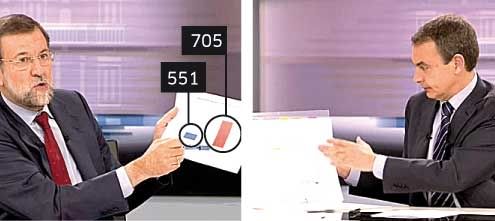
On teh last and boring TV political debate in Spain, graphics was the latest toy contendants liked to use. Rajoy, the conservative candidate, used false scales, ina way that he could have used bars of the size he liked. If Zapatero, the socialist leader, lied or not with his graphics is harder to know. His 'White Book' (as he called it) was so white that you'd need more than a good TV to know what he was showing.

If you want to know more... Juantxo Cruz advices to use graphics on tv debates, on VisualMente (spanish)


01/03/2008

Steve Duenes Q & A


Steve Duenes, Graphics Director of The New York Times, was answering last tuesday questions from the readers on the digital edition of his newspaper. And they had to do a selection of the questions. I wonder if in Spain somebody would ask something to the graphics director or if even people know what it is. It's a usual Q&A, for the general public, not professional. But it's still a great opportunity to know the procedures and way of working at NYT. You can access the texto clicking here.

Thanks to Guillermo Nagore for the information